Pressure washing cost: what drives the price up or down
By Kai Ellis · Updated 2026-06-10
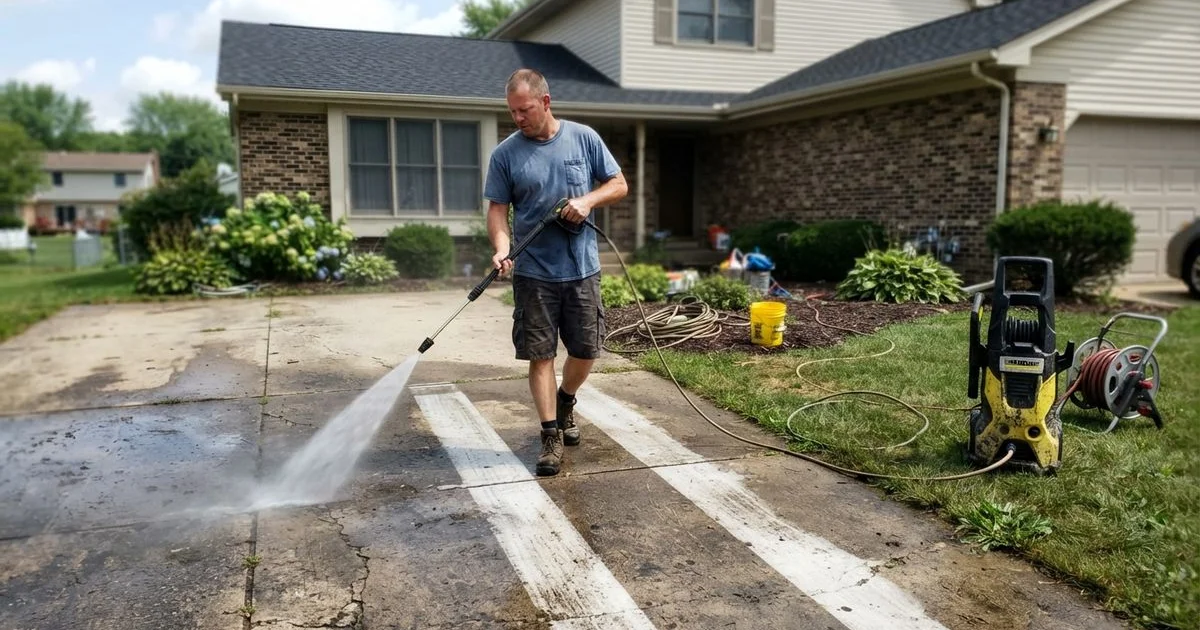
Pressure washing quotes in Columbia can look wildly inconsistent if you only compare the final number. Once you know what the price is actually built from, the range starts to make sense.
The two numbers that set the price
Area and surface type do almost all the work. A 1,000 square foot concrete driveway costs meaningfully less than 1,000 square feet of roof, even though the square footage is identical, because the surfaces are not cleaned the same way.
| Surface | Relative cost per square foot | Why |
|---|---|---|
| Concrete driveway or patio | Baseline | Flat, durable, full pressure is safe |
| House siding | About 1.2x baseline | More careful angle and pressure control needed |
| Wood deck | About 1.4x baseline | Lower pressure required to avoid gouging the wood |
| Roof | About 1.8x baseline | Height access, delicate shingles or tiles, usually a soft wash only |
You can get a rough number for your own property before you call anyone: this directory’s home page links to a pressure washing cost estimator that uses your square footage and surface type.
Condition matters as much as size
A driveway with light dust washes off in a fraction of the time it takes to lift years of oil stains, tire marks, or algae. Heavy staining and pet accidents can push a quote up by close to 40 percent over a lightly soiled equivalent, because the crew has to make multiple passes or pre-treat the area with a cleaning solution before pressure washing even starts.
Accessibility is the other quiet cost driver. A driveway a truck can pull right up to is simpler to service than a fenced backyard patio the crew has to hand-carry equipment into, or a steep roofline that requires ladders and fall protection.
Soft wash vs high pressure: not interchangeable
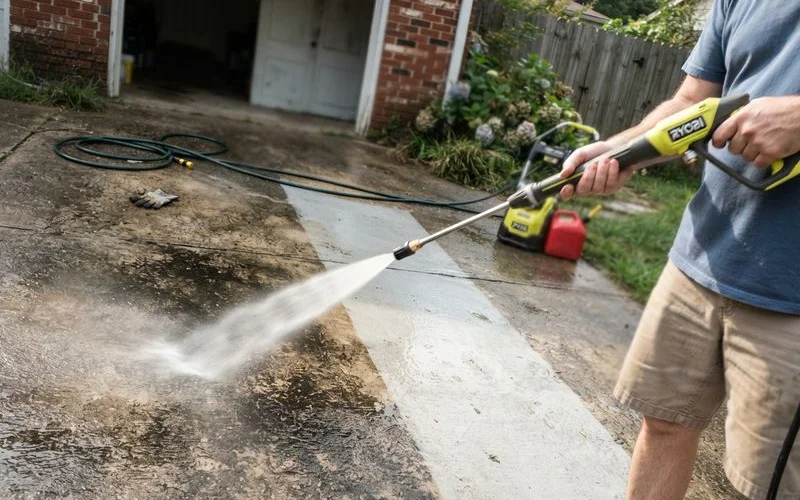
Not every surface should be blasted at full pressure. Siding, roofing, and painted wood are usually cleaned with a chemical wash, a lower-pressure method that relies on a cleaning solution to lift dirt and kill mildew rather than force alone. High pressure on the wrong surface can strip paint, force water behind siding panels, or gouge soft wood, damage that costs far more to fix than the wash itself. If a company quotes the same flat pressure for your driveway and your siding without asking about the surface, that is worth a follow-up question before you book.
When it is worth doing
In a humid climate like Columbia’s, pollen, mildew, and algae build up on exterior surfaces steadily through spring and summer. An annual wash on driveways and siding keeps that buildup from staining permanently into the surface, which is a much cheaper habit than waiting three or four years and needing a more aggressive, more expensive clean to undo it. Decks and roofs can typically go longer between washes, closer to every one to two years, unless you see visible moss, dark streaking, or standing algae.
Getting a fair quote
Ask what pressure level and method the company plans to use on each surface, not just the total price. A company that distinguishes soft washing for siding and roofs from high-pressure work on concrete is signaling they understand the material, not just the machine. You can browse companies that specialize in this work in the pressure washing category and compare how they describe their process before requesting quotes.
Get the quote in writing with the surfaces and square footage listed out. A verbal number that changes once the crew arrives is the most common source of pressure washing complaints, and a written scope protects both sides if the job turns out to need more time than expected. The same rule holds if you are also pricing out house cleaning costs at the same time: get the scope in writing before you compare quotes across companies.
Bundling multiple surfaces
Many households need more than one surface done at once, a driveway and a deck, or siding and a patio. Bundling these into a single visit often costs less overall than booking them separately, since the crew is already on-site with equipment set up. It is worth asking whether a company offers a bundled rate before requesting quotes for each surface individually, since the savings can be meaningful. For the criteria used to rank the companies listed here, see how we rank.
FAQ
- What surface is cheapest to pressure wash?
- A concrete driveway or patio is usually the most affordable per square foot since it is flat, durable, and can take full pressure without special handling. Roofs and wood decks cost more because they need lower pressure, more careful technique, and more time.
- Does pressure washing damage anything?
- Done at the wrong pressure or angle, yes, it can strip paint, gouge soft wood, or force water behind siding. That is why a lot of exterior work is now done as a soft or chemical wash rather than straight high-pressure water, especially on siding and roofs.
- How often should a home get pressure washed?
- Once a year is typical for driveways and siding in a humid climate like Columbia's, where mildew and pollen build up steadily. Decks and roofs can usually stretch to every one to two years unless there is visible staining or moss.
- Is pressure washing cheaper than replacing siding or a deck?
- By a wide margin in almost every case. Restoring the look of siding, a deck, or a driveway through washing costs a fraction of replacement, which is the main reason it is worth doing before staining or discoloration gets bad enough to look permanent.